
Nauru launched a “climate resilience citizenship” program in early 2025 to sell passports for at least $105,000 each, aiming to fund climate action and potential relocation due to rising sea levels. Despite slow initial uptake, with only six applicants approved by early August 2025. The funds are intended to create a sustainable future for the nation and help cover relocation costs for its citizens.
Overview of the citizenship program
- Purpose: The Economic and Climate Resilience Citizenship Program (ECRCP), launched in February 2025, is a “golden passport” scheme designed to fund Nauru’s climate adaptation efforts. The funds are intended to finance projects, including the relocation of 90% of the island’s population to higher ground due to rising sea levels.
- Cost: A single applicant must make a minimum contribution of $105,000, plus various fees. The total minimum cost is about $130,000.
- Goals: Nauru’s initial target was to raise over $5 million in the first year by selling 66 passports. In August 2025, officials reported that a German family was among the first six approved applicants, contributing about $140,000 toward climate projects. Long-term plans aim to generate $60 million annually.
- Benefits: In exchange for the investment, applicants receive a Nauruan passport, which provides visa-free access to approximately 89 countries, including the UK, UAE, and Singapore.
Explanation of Exam Oriented Key Terms
01About Nauru |
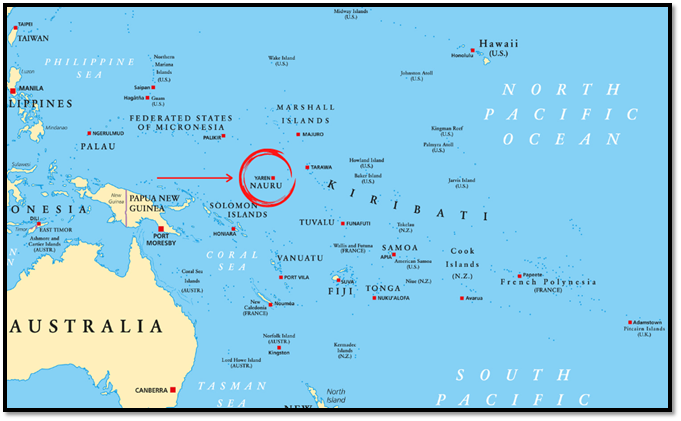
Nauru is a microstate in the southwestern Pacific Ocean, known for its extensive phosphate deposits that were mined until the 1990s. Geography and Environment
Politics and Governance
Economy and Society
India-Nauru Relations
|
 Current Affairs
 Contemporary Issues
 Subject Wise
  Essential Editorials